
Real Estate Development In Nigeria 2026: Inclusive, Affordable Housing and Infrastructure
Real Estate Development In Nigeria 2026: Inclusive, Affordable Housing and Infrastructure
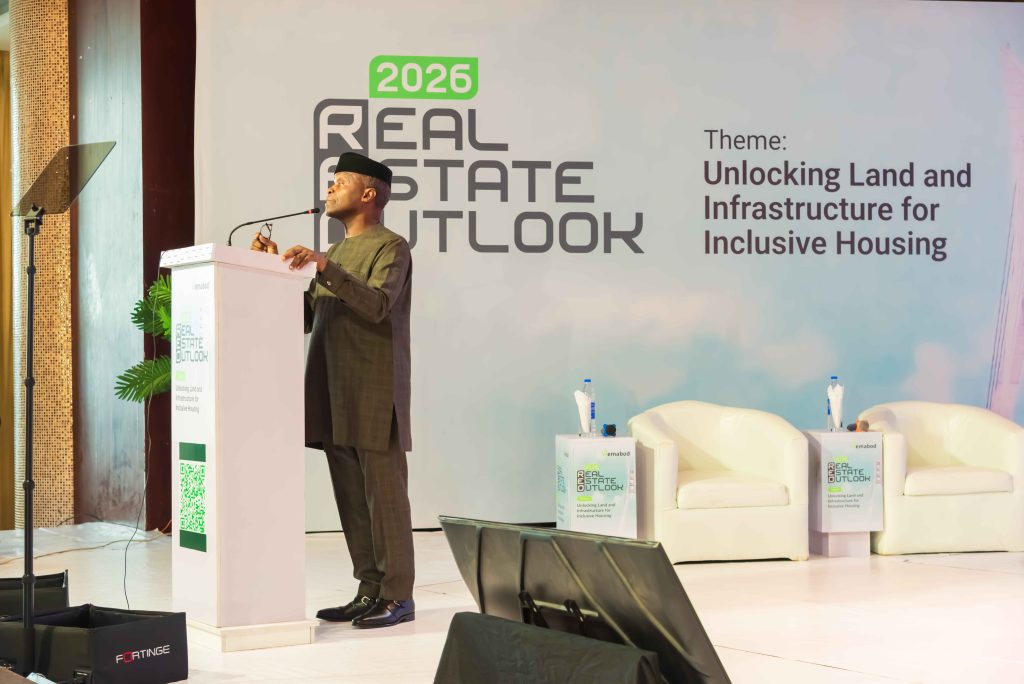
Nigeria’s housing sector faces a severe shortfall. Recent analyses estimate a housing deficit of over 20 million units (some estimates put it as high as 28 million). At the Wemabod Real Estate Outlook Conference 2026, experts argued that solving this crisis is not just about more money—it requires integrated planning. They emphasize that land availability, housing infrastructure in Nigeria, and actual homebuilding must be aligned. By coordinating land assembly, utility delivery, and construction, Nigeria can unlock inclusive housing in Nigeria that benefits all citizens.
Inclusive Housing as a National Priority
In his keynote, former Vice President Prof. Yemi Osinbajo stressed that housing is a foundational development issue, not a luxury. He reminded the audience that “housing is not just a commodity…[but] the cornerstone of socio-economic transformation, equity, and human dignity.”. He warned that fragmented approaches won’t work: “You cannot unlock inclusive housing if land, infrastructure and housing are treated as separate conversations.”. In other words, policymakers must coordinate housing policy with land reform and infrastructure planning. This unified approach is essential to meet Nigeria’s real estate development goals for 2026 and beyond.
Infrastructure-First Planning: Lessons from Bodija
The conference highlighted infrastructure-first planning as a proven strategy. Osinbajo cited the Bodija Housing Estate in Ibadan – built in the 1950s – as a model. Bodija was conceived as “not just a housing project; it was a development strategy.” Critical infrastructure (roads, water, power, schools) was delivered before homes were built. By treating utilities as public goods, Bodija “quietly subsidised affordability”. This lowered the real cost of housing because families did not have to install their own roads or water systems. In practice, such upfront housing infrastructure (schools, clinics, electricity) makes new neighbourhoods more accessible and mixed-income. Bodija’s legacy shows that when cities invest in housing infrastructure in Nigeria early, the results are enduring, livable communities.
Affordable, Inclusive Housing Through Collaboration
Speakers emphasized that affordable housing cannot be delivered by any single actor. Wemabod CEO Bashir Oladunni noted that “unlocking land and infrastructure is the way to make housing affordable and accessible for everyone.”. In practice, this means government and private developers must work together. For example, governments can assemble and title land, while private companies bring capital and construction expertise. This public-private collaboration is exactly the idea of public-private partnerships in real estate. As one analysis puts it, Nigeria needs PPP models so that the “public and private sectors…synergise efforts to address the housing and other infrastructure challenges”. By leveraging PPPs, the state can de-risk projects and focus on land and infrastructure, while developers supply financing and execute the build. The result is more affordable housing projects reaching low- and middle-income Nigerians.
Furthermore, panelists outlined a clear strategy for implementation:
- Government-led Land & Infrastructure: Federal and state agencies should take charge of land assembly and large-scale infrastructure deployment (roads, water, electricity).
- Private Investment & Execution: Homebuilders and investors then use that foundation to finance and construct new housing developments.
- Strong Institutions: Streamlined regulations and empowered agencies ensure projects move quickly from planning to delivery.
- Purposeful Collaboration: Only through intentional public-private partnerships can we create the intended sustainable, mixed-income housing communities.
These steps create a virtuous cycle: integrated planning and public-private partnerships unlock resources to build affordable housing at scale.
Planning Regionally for Sustainable Communities
Wemabod Chairman Engr. Nureni Adisa underscored the need for a regional approach. He stated, “sustainable growth is impossible without inclusive housing, and inclusive housing is impossible without unlocking land and building infrastructure first.”. In practice, this means city and state governments must coordinate, since housing markets and infrastructure networks do not stop at municipal borders. Panelists agreed that deliberate planning can yield sustainable housing communities: well-equipped, mixed-income neighbourhoods connected by transit, green space, and jobs. In their view, the future of Nigerian real estate depends on “system thinking, not isolated projects,” and on long-term social value. This holistic vision aligns housing, transportation, and environmental planning to create resilient urban districts.
Looking ahead, all parties stressed the importance of concrete follow-through. Government agencies (such as the Regional Development Commissions) are seen as critical enablers, coordinating infrastructure across states. Private developers are encouraged to pursue inclusive projects, leveraging innovative financing and affordable models. By building public-private partnerships in real estate, stakeholders can ensure that new developments are both market-driven and socially balanced.
Wemabod’s Commitment and Next Steps
Wemabod Limited reaffirmed its role as a thought leader in Nigeria’s housing future. The 2026 outlook conference reinforced a powerful message: “unlocking land, enabling infrastructure, and coordinating development are essential to creating functional, affordable, and inclusive communities.”. This mantra reflects Wemabod’s broader mission to deliver long-term value. As one leader noted, “Real estate development must create lasting social and economic value. Aligning land, infrastructure, and housing is key to inclusive urban growth.”. In practice, Wemabod plans to champion projects that “unlock land, deliver infrastructure, and build sustainable, livable communities across Nigeria.”.
The path forward is clear: by integrating policy, planning, and partnerships, Nigeria can turn the 2026 outlook into reality. Moving beyond isolated projects to systemic, collaborative development will help meet the affordable housing goals. Ultimately, inclusive housing in Nigeria is a strategic investment in economic resilience, social equity, and future growth. As the conference emphasized, everyone—government, industry, and citizens—must work together to unlock the land and infrastructure that make true affordable housing possible.